
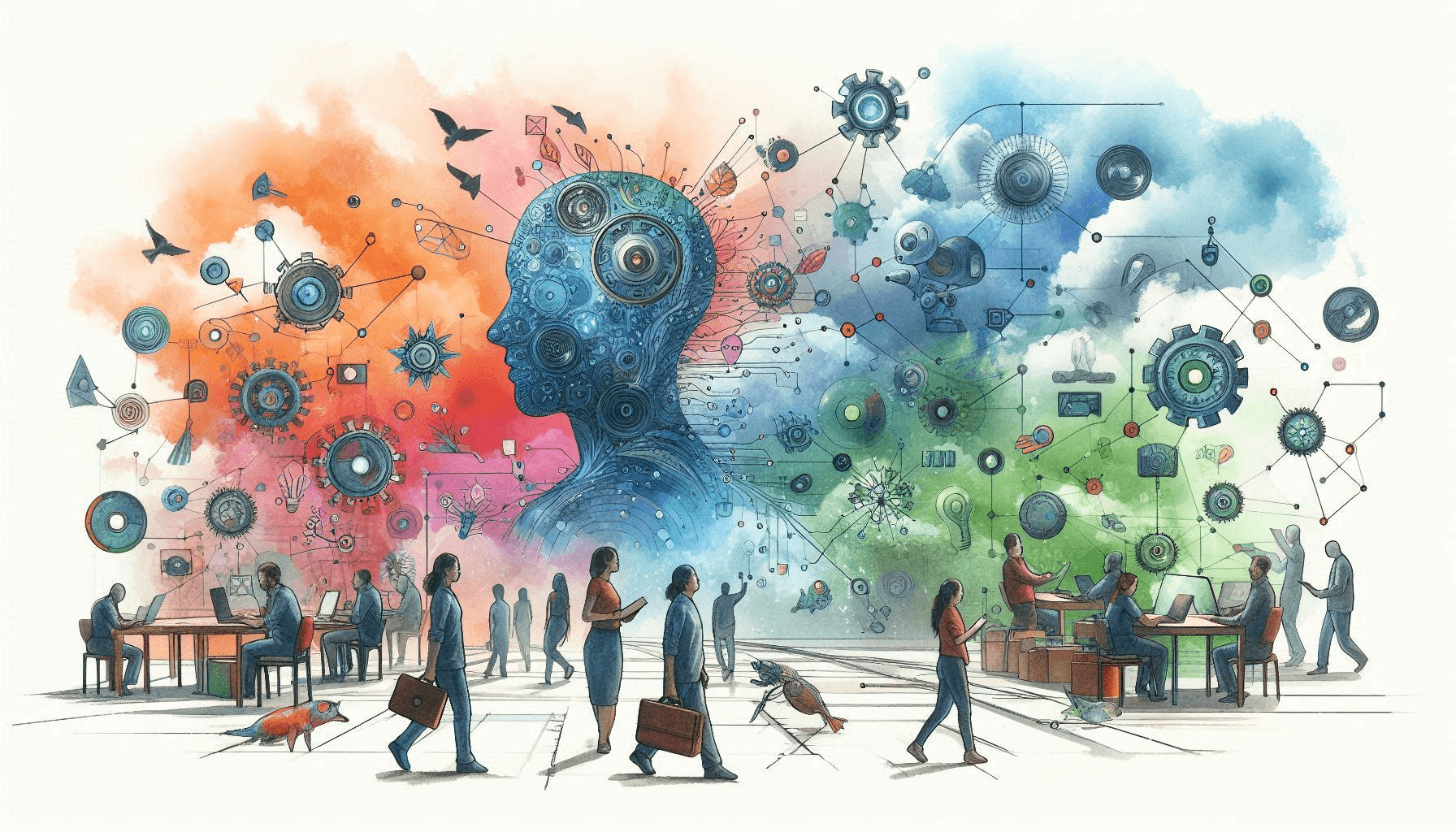
As information and automation replace many mid-skill jobs — shop clerks, travel agents, accountants, factory workers — the new roles split into high-skill work such as engineering, programming, management, and design, or low-skill work such as retail, cleaning, and customer service. <Ultralearning, Scott Young>
The split in skill is getting sharper. Polarization will likely grow in many other areas too. With AI and robots, a lot of jobs may disappear. So what should we do?
In the near future I expect the scope of high-skill work to expand very quickly. The range of work one person can cover will grow without a clear limit, and even inside high-skill jobs a few people will start to monopolize the work. People who can actually put AI and robots to work will become one-person armies — doing the work of 10 people, 100 people, maybe more. If you're in a high-skill role and you don't learn those tools, you'll get left behind. In other words, high-skill people who use AI will replace high-skill people who don't.
One day AI may take most of the work humans do. Until then, I still want to work. So I keep learning. I learn new tools and think about what they can connect to. I think about what will change, and what will not. There is no final answer, but there are hints.
That is why we have to keep learning. To survive change, and then to grow, we need constant learning and adaptation. To be ready for the next challenge and the next opening, we have to keep learning.
#HOWBIM, #Ultralearning, #Scott Young, #continuous learning