
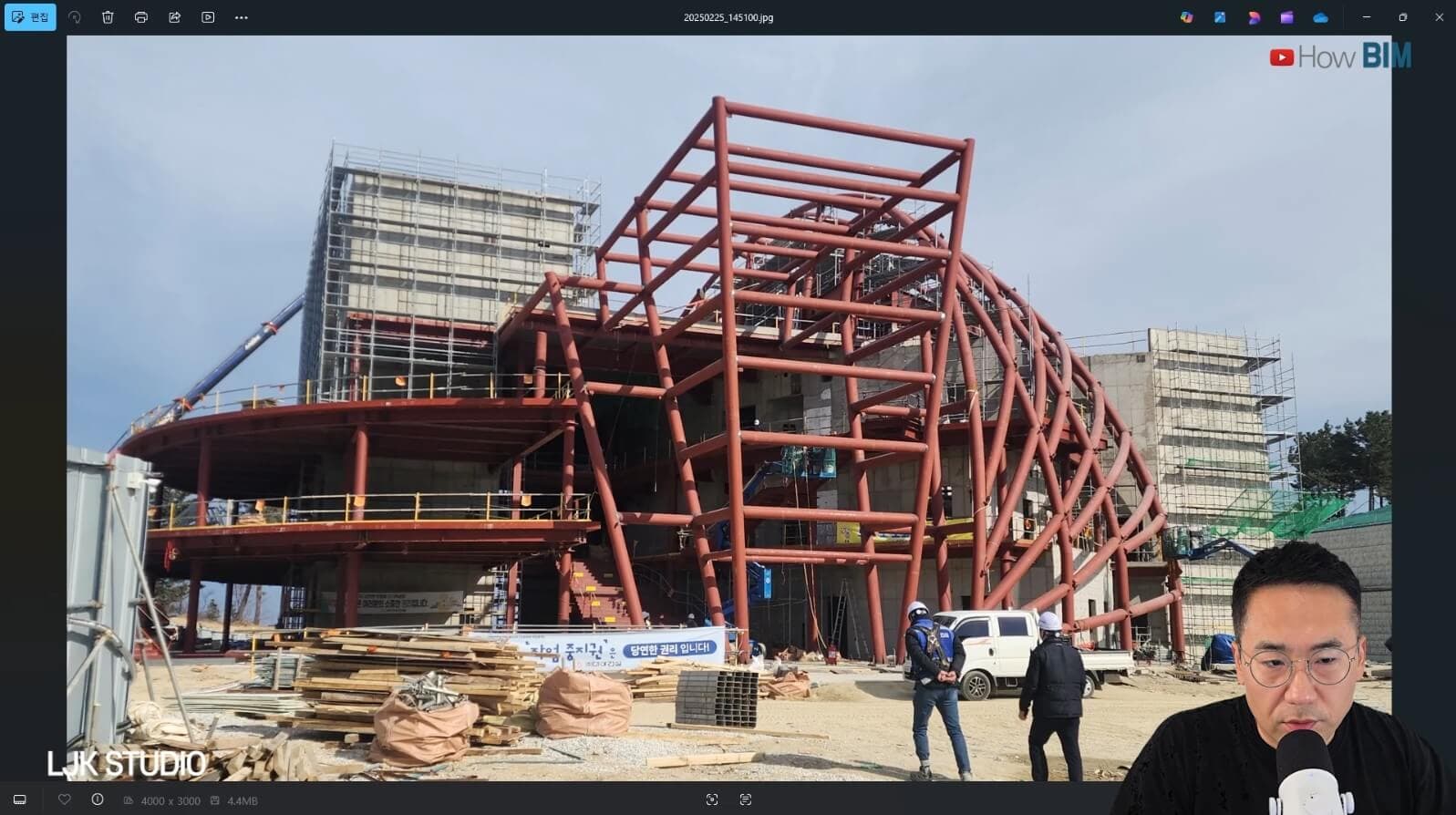
Reverse engineering is the closer on a job site. How does it stop a cost bomb?
1. Why does architecture need reverse engineering?
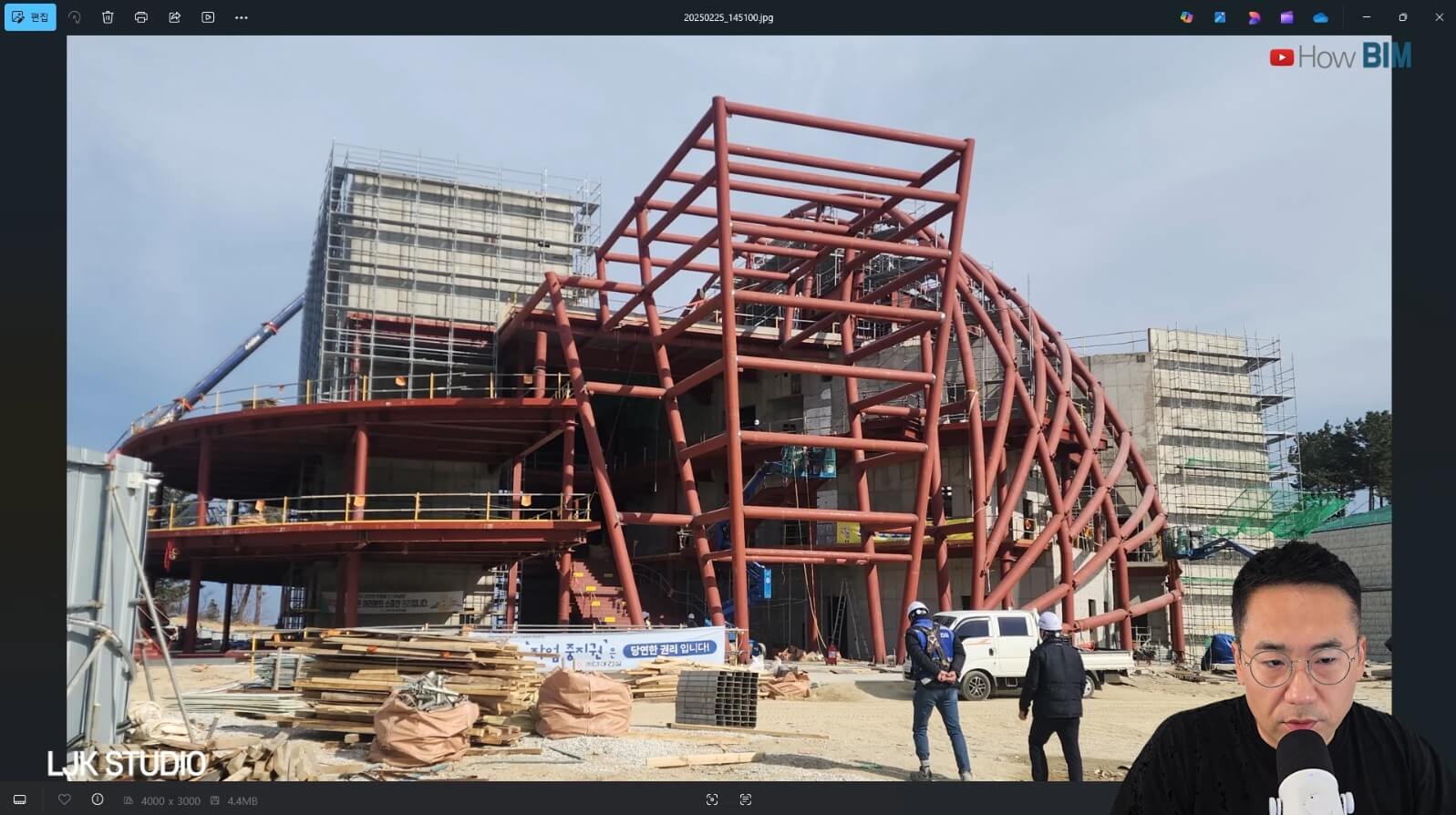
Have you heard of reverse engineering? In architecture, it means redesigning a building that already exists. It is especially necessary for curved buildings and complex steel structures.
A curved pipe beam, for example, is almost impossible to measure by hand on site. Measuring that kind of structure accurately and comparing it with the design is critical. That is how the next stage of work can proceed without problems.
This is where a 3D scanner helps. Even with a scanner, capturing a large building accurately is not easy. That is why reverse engineering matters even more.
2. How does a 3D scanner stop a cost blowout?
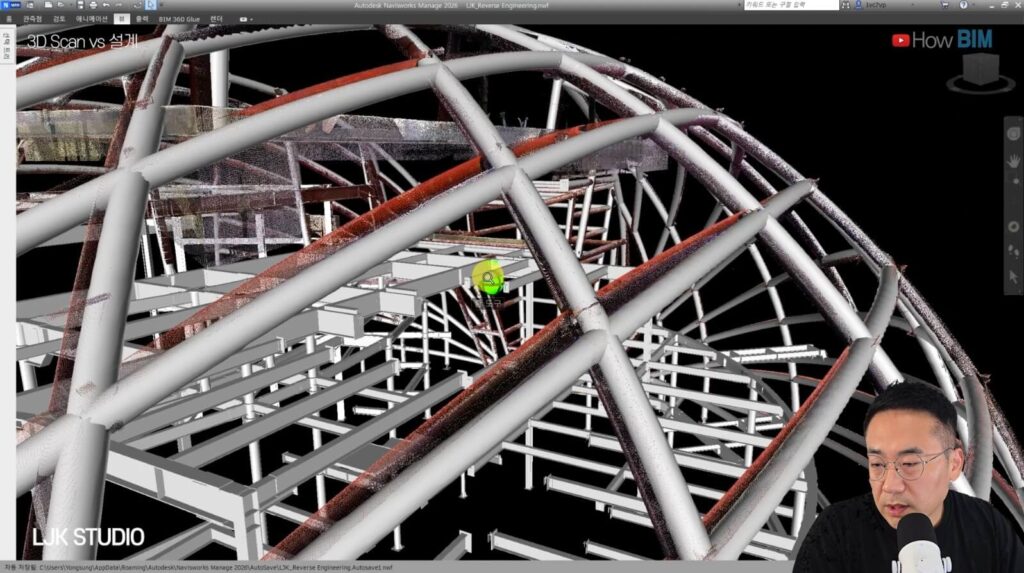
On site, a 3D scanner is used to measure the actual built condition precisely. After every part of the building is captured, the data is compared with the design. It is like checking how far the current building has drifted from the original drawings.
What happens if there is a deviation between the original steel shop model and the position as installed? Deviations can come from fabrication, site conditions, or the installation method.
On a straight building, checking deviation is relatively easy. On a complex curved building, it is very hard to confirm installation without 3D scan data. The scanner is the tool that stops that cost bomb.
3. Is there a scanner combination that raises accuracy?
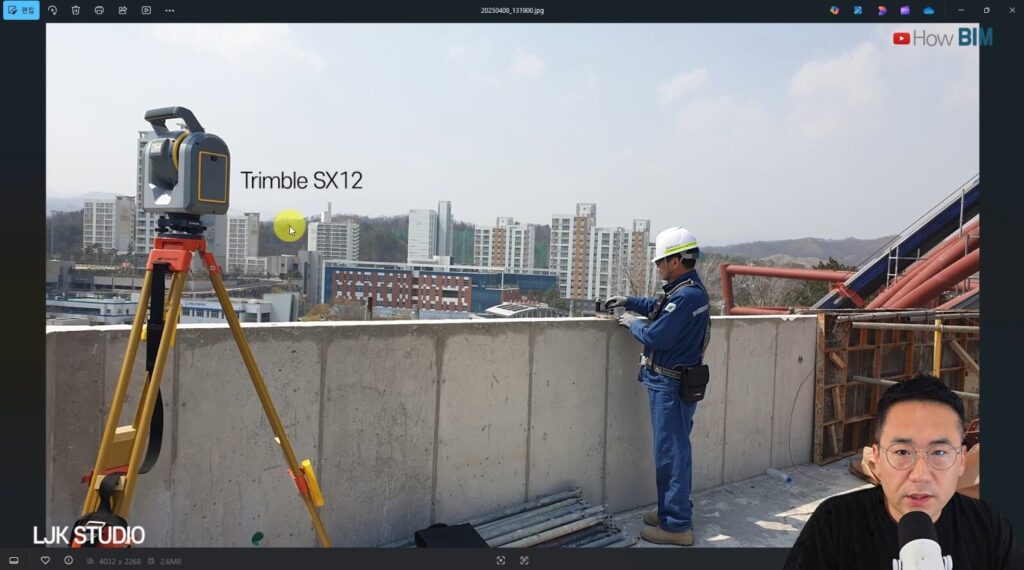
To raise accuracy, we use a particular scanner combination: Trimble's SX12 and X7. The SX12 is a total-station-based 3D scanner. It is very accurate, but setup takes longer and it captures fewer points.
The X7 is a more typical 3D scanner. Setup is easy and scanning is very fast. You don't need to baby the leveling; set it down and scan.
So we grab most of the points with the X7, and drop in coordinate control points with the SX12 in between. Put the two together and you can get down to millimeter accuracy. Pretty wild, right?
4. How do you correct deviation in the reverse model?
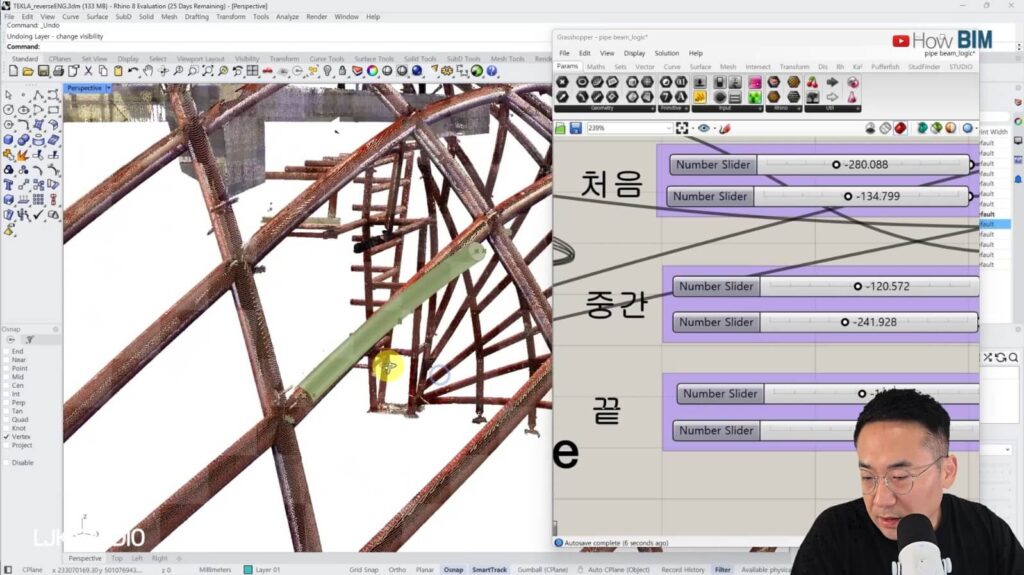
From the measured data, we then build a reverse model. We use Rhino and Grasshopper, with logic that makes the mesh easier to move.
A curved structure such as a pipe beam should normally follow a regular R value. On site, it can shift a little. Reverse modeling then updates the model to match what was actually built.
Creating a centerline and mesh is not the end. To place curtain wall or finishes on the outside, the detail has to follow the structure as installed. We use Advance Steel to build all the connection details before the reverse model is finished.
5. What would have happened without reverse engineering?
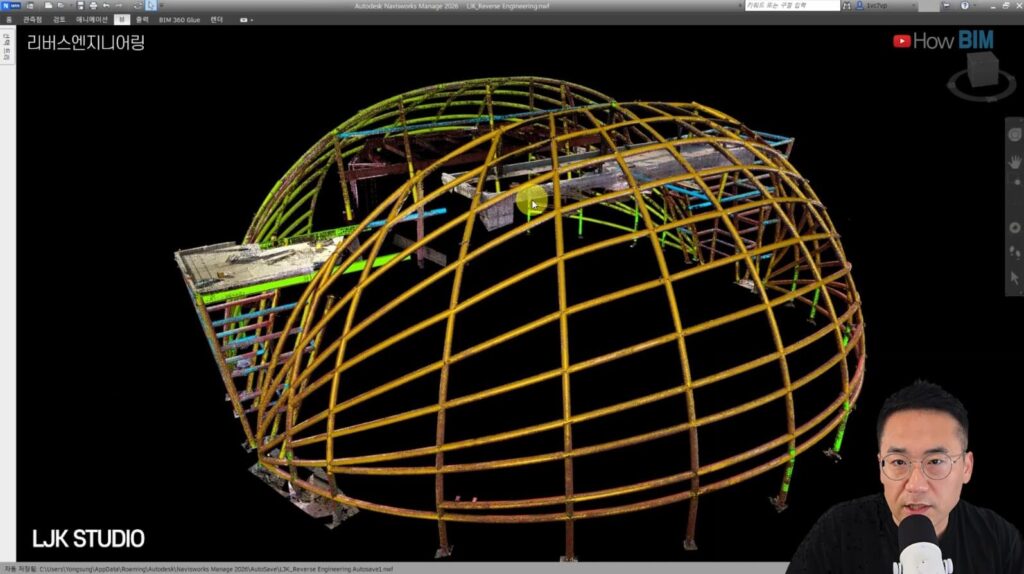
Without reverse engineering, the next steps would have been ugly. If we had continued without knowing the installed steel did not match the design, serious problems would have followed.
Curtain wall or finish panels made to the original design would not have fitted. That means rework cost, delay cost, and a large loss of material.
- We would have needed extra equipment and a longer schedule, and the cost would have piled up from every side. Because reverse engineering caught this early, we saved a ton of money.
6. Will digital tools lead the site from here?
To actually build a building this complex, many digital tools are needed. Reverse engineering is becoming one of the essential ones.
It reduces construction deviation, cuts cost, and prevents delay. Digital tools will only matter more on future projects.
Reverse engineering is not just redesigning a building. It is becoming a key to accuracy and efficiency in the industry. Sites will keep getting smarter and more digital.
#reverse engineering #3D scanning #digital construction #BIM #Rhino #Grasshopper #AdvancedSteel #Trimble #SX12 #X7